


Delhi’s Cloud Seeding Trial: Full Coverage of India’s Artificial Rain Experiment
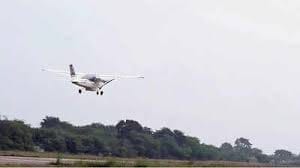
Delhi’s much-hyped cloud seeding trial—an ambitious attempt to induce artificial rainfall and clear the city’s toxic smog—has failed to produce any measurable rain. Despite deploying advanced weather modification technology and spending over ₹3.2 crore, the experiment resulted in zero precipitation, sparking scientific debate and political controversy alike.
Conducted in collaboration with IIT Kanpur, the operation involved three aircraft sorties between October 27 and 29, 2025, aimed at triggering rainfall over the capital. However, experts now say that “unfavorable meteorological conditions” and “low moisture availability” led to its failure.
☁️ What Was the Purpose of the Cloud Seeding Trial?
Delhi’s air quality typically deteriorates to hazardous levels post-Diwali due to stubble burning, firecracker pollution, and winter inversion. To tackle this recurring crisis, the Delhi government and IIT Kanpur joined forces to conduct the first full-scale artificial rain experiment in decades.
Primary objectives:
Reduce PM2.5 and PM10 levels by precipitating particulate matter.
Test viability of artificial rain as an emergency smog-control measure.
Evaluate the cost-benefit ratio of future operations on a larger scale.
Environment Minister Manjinder Singh Sirsa had earlier stated that if successful, the trial could pave the way for routine cloud seeding during peak pollution months.
✈️ How Was the Experiment Conducted?
According to IIT Kanpur Director Prof. S. Ganesh, the mission involved using two aircraft equipped with flares containing silver iodide—a compound that encourages water vapor condensation in clouds.
Technical Process:
Cloud identification through satellite and radar systems.
Aircraft ascension to targeted altitudes (typically 5,000–10,000 feet).
Release of silver iodide flares to act as nuclei for moisture condensation.
Monitoring precipitation response using Doppler radar and weather models.
Three sorties were carried out over Delhi and neighboring NCR regions on October 28–29. However, despite favorable cloud coverage at certain locations, rainfall was negligible or absent.
💧 Why Did the Artificial Rain Fail?
Experts and meteorologists have identified multiple reasons behind the failure:
Low moisture content – The atmosphere lacked sufficient humidity for seeded particles to trigger condensation.
Unsuitable cloud type – Not all clouds are “seedable.” Stratiform clouds present during the operation were too thin for effective rainfall.
Temperature constraints – Air temperature and dew point differences were too large, preventing droplet formation.
Timing and scale – The operation window was limited, with only three sorties, making it statistically less likely to succeed.
Wind dynamics – Strong upper winds dispersed the seeding flares prematurely.
As Prof. S. Ganesh noted, “Cloud seeding is not a magic wand—it depends on a complex set of conditions aligning perfectly. Delhi’s post-monsoon atmosphere simply didn’t cooperate.”
💸 Cost of the Operation
Reports from multiple sources indicate the total expenditure ranged between ₹1.2 crore and ₹3.2 crore depending on accounting for aircraft rental, seeding materials, and logistics.
ComponentEstimated CostAircraft sorties (3 flights)₹1.9 croreSilver iodide flares₹30 lakhMeteorological instruments & analysis₹40 lakhCoordination and ground staff₹20 lakhTotal Estimated Cost₹2.8–₹3.2 crore
Officials from IIT Kanpur and Delhi’s Environment Department have defended the cost, calling it a “scientific investment” rather than a failure.
🌫️ Impact on Pollution Levels
While no significant rainfall occurred, preliminary data from Skymet and IIT Kanpur indicated a minor reduction in PM2.5 and PM10 concentrations around targeted zones.
However, Delhi’s overall AQI remained in the ‘Severe’ category (above 400), showing negligible city-wide improvement.
AreaPM2.5 (Before Trial)PM2.5 (After Trial)AQI CategoryAnand Vihar460450SevereRK Puram432425SevereITO410403Very PoorDwarka397390Very Poor
(Source: CPCB provisional data, October 29)
⚡ Political and Public Reactions
The failure of the cloud seeding experiment has triggered political blame games between the AAP-led Delhi government and the BJP.
AAP Minister Saurabh Bharadwaj mocked the effort, saying, “Even Lord Indra isn’t with them.”
BJP Delhi unit posted visuals of the seeding aircraft, emphasizing it as a *“technological step against pollution.”
Social media was divided — some praised the innovation, while others criticized it as an *“expensive publicity stunt.”
Environmentalists, meanwhile, stressed that artificial rain is not a substitute for addressing the root causes of Delhi’s air crisis—like crop burning, vehicular emissions, and industrial waste.
🌦️ Expert Opinions
1. Dr. M. Palawat (Skymet Weather):
“Cloud seeding requires deep, moisture-rich clouds. Unfortunately, the conditions over Delhi this week were not ideal.”
2. Dr. Sophiya Mathew (Indian Express):
“Not every cloud can be seeded. Stratiform clouds with limited vertical growth rarely produce rain.”
3. IIT Kanpur Team:
“Technically, the mission succeeded in executing seeding operations. The lack of rainfall does not imply operational failure—it’s a learning step.”
🌍 A Look Back: Delhi’s Cloud Seeding History
Delhi’s 2025 trials mark the third attempt at artificial rain since India first experimented with it in 1957. Previous efforts include:
1957: First atmospheric modification experiment over Delhi.
2018 (Proposed): Delhi government planned post-Diwali cloud seeding, but it was shelved due to clearance issues.
2025: IIT Kanpur-led operation — largest of its kind.
🔭 What’s Next?
Despite the failure, both IIT Kanpur and the Delhi Environment Department have signaled plans for further trials, possibly during the pre-monsoon season of 2026, when humidity levels are higher.
Minister Sirsa stated,
“We will learn from this attempt. Future seeding will be conducted in more favorable conditions to ensure measurable results.”
🧭 Conclusion
Delhi’s cloud seeding experiment underscores both the ambition and limitations of modern weather engineering. While the trial failed to induce rain, it offered valuable insights into atmospheric behavior, technological precision, and the complexities of combating urban air pollution.
Artificial rain may not be Delhi’s silver bullet—but it represents a step toward scientific innovation in the battle against toxic air. The real solution, experts say, lies in long-term policy reforms, emission control, and sustainable urban planning.

Press Release on Our All Websites for Powerful Online Presence
Get your brand featured with a world-class press release, published across all our high-authority websites — complete with powerful do-follow backlinks. Crafted to meet global press release standards, our service ensures maximum credibility, visibility, and SEO impact. Special pricing and exclusive offers are available for a limited time. Contact us today at sunil@justbaazaar.com to elevate your brand’s presence."
ABOUT US
JB Daily News Since 2018


Created with ©systeme.io