


Iran Power Shift After Strikes Global Tensions Rise
Over the past few weeks, Iran has once again moved to the center of global attention. But unlike previous flashpoints driven purely by external tensions, this time the story began from within.
For several days, Iran experienced something unusual — silence.
The internet went down.
Social media froze.
Independent videos disappeared.
Local reporting became nearly impossible.
When a nation of over 85 million people suddenly goes digitally dark, it rarely signals normalcy. Instead, it often indicates internal strain — something shifting beneath the surface.
And that is precisely what appears to have happened.
Before missiles were launched, before foreign powers took action, Iran was already undergoing an internal recalibration of power.
The Silence Before the Shock
The internet blackout was the first sign.
In modern geopolitics, information flow is power. Governments rarely shut down digital networks unless they are attempting to control narrative, prevent mobilization, or hide developments.
In Iran’s case, reports began to circulate quietly:
Changes within security agencies
Reassignments inside military leadership
Strategic personnel being replaced
None of it was officially acknowledged.
But patterns suggested internal consolidation.
Some commanders reportedly disappeared from public view.
Others were reassigned.
A few key figures in operational roles were quietly sidelined.
These moves were not loud, public purges — but subtle adjustments.
The kind that happen when leadership wants stability without triggering panic.
External Pressure Builds
Around the same time, global intelligence chatter began to suggest that the United States was preparing for possible military action.
Naval movements were observed.
Air readiness increased.
Missile assets were reportedly positioned.
Yet, no immediate strike came.
Instead, a pause.
This pause now appears strategic.
When external actors observe internal restructuring, they often delay intervention. Why?
Because outcomes matter.
External pressure works best when internal balance is unsettled.
Waiting allows:
New command chains to form
Internal factions to weaken
Decision centers to stabilize
In essence, it allows a state to either regain cohesion — or fracture further.
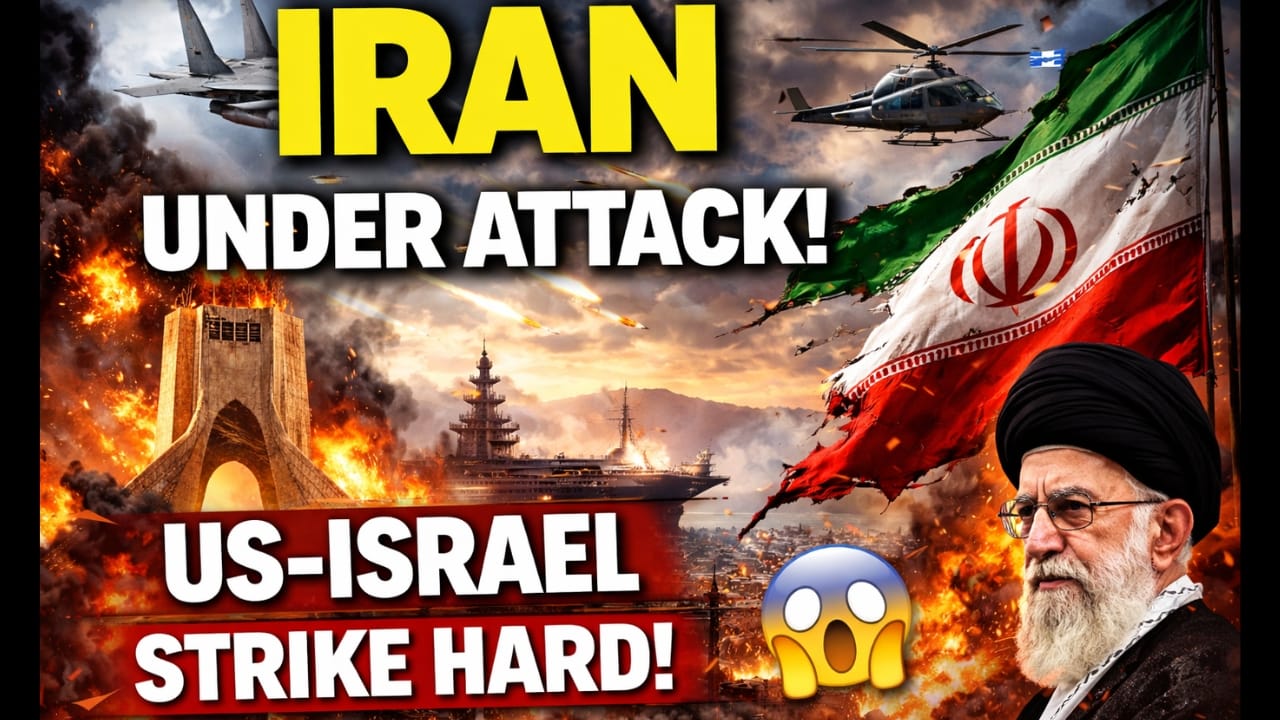
The Strikes That Followed
Eventually, the moment arrived.
Targeted attacks were carried out.
These were not broad, destructive campaigns.
They appeared selective.
Reports indicate that:
Missile storage locations were hit
Key operational facilities were targeted
Certain control hubs were disrupted
The strikes seemed designed less for destruction and more for signaling.
The message:
Contain escalation.
Maintain restraint.
Avoid expansion.
Iran responded — but cautiously.
Missiles were launched in retaliation.
Yet the response stopped short of full-scale escalation.
This restraint was telling.
A state that is internally reorganizing rarely seeks open confrontation.
Leadership and Structural Shifts
Inside Iran, leadership continuity was maintained.
Top-level figures were reportedly moved to secure locations.
Command structures remained intact.
This indicates that the system itself did not collapse.
But it did experience stress.
And perhaps more importantly — rebalancing.
Some of the more ideologically rigid elements appear to have lost influence.
Centralized authority seems to have strengthened.
Operational chains became tighter.
This is often the hallmark of a state moving from ideological posture toward strategic survival.
Regional Networks Under Pressure
Iran’s influence has long extended beyond its borders through various aligned networks.
Recent developments suggest that some of these external coordination mechanisms may have been weakened.
Handlers responsible for managing regional outreach were reportedly replaced or reassigned.
Such shifts indicate a shift in priorities:
From outward projection
To inward consolidation
When internal stability becomes the priority, external expansion is often temporarily reduced.
What This Means for the Middle East
The broader region is watching carefully.
A weakened but stable Iran creates a different dynamic than a fragmented or aggressive one.
If internal consolidation continues:
Direct confrontation becomes less likely
Controlled responses become more probable
Strategic patience may define policy
External powers, particularly the United States and Israel, may continue to apply pressure — but through limited, periodic actions rather than sustained campaigns.
This allows influence without triggering full-scale conflict.
Implications for India
India’s interests in the region are significant.
And developments in Iran directly affect:
Energy security
Trade connectivity
Strategic positioning
A more stable Iran may improve oil supply predictability.
Trade relations could expand.
The Chabahar port — a key connectivity project — may gain renewed importance.
India’s influence in the region could strengthen if Iran moves toward pragmatic engagement.
Historically, instability has complicated cooperation.
Stability opens doors.
The Balance of Power Shifts
Global geopolitics often hinges not on collapse — but on adjustment.
Iran has not fallen.
But it has shifted.
Internal recalibration has taken place.
External pressure has been applied.
The result is neither victory nor defeat — but transformation.
Power has moved.
Influence has adjusted.
Priorities appear to be changing.
Possible Future Paths
Several outcomes are now possible.
1. Stabilization
Iran may continue consolidating internal authority, focusing on domestic resilience.
2. Managed Pressure
External actors may maintain intermittent pressure to prevent resurgence of aggressive postures.
3. Reduced Regional Activism
External influence networks may become less assertive as internal priorities dominate.
A New Phase Begins
The events of recent weeks represent not an ending — but a transition.
Iran stands altered.
Its structure intact, yet shaken.
Its leadership secure, yet recalibrated.
Its strategy evolving.
And as history repeatedly shows — moments of adjustment often define future direction more than moments of collapse.
The coming months will determine whether Iran emerges:
More pragmatic
More cautious
Or more determined
But one thing is clear —
The silence that began with an internet blackout has now reshaped regional reality.

Press Release on Our All Websites for Powerful Online Presence
Get your brand featured with a world-class press release, published across all our high-authority websites — complete with powerful do-follow backlinks. Crafted to meet global press release standards, our service ensures maximum credibility, visibility, and SEO impact. Special pricing and exclusive offers are available for a limited time. Contact us today at sunil@justbaazaar.com to elevate your brand’s presence."
ABOUT US
JB Daily News Since 2018


Created with ©systeme.io